
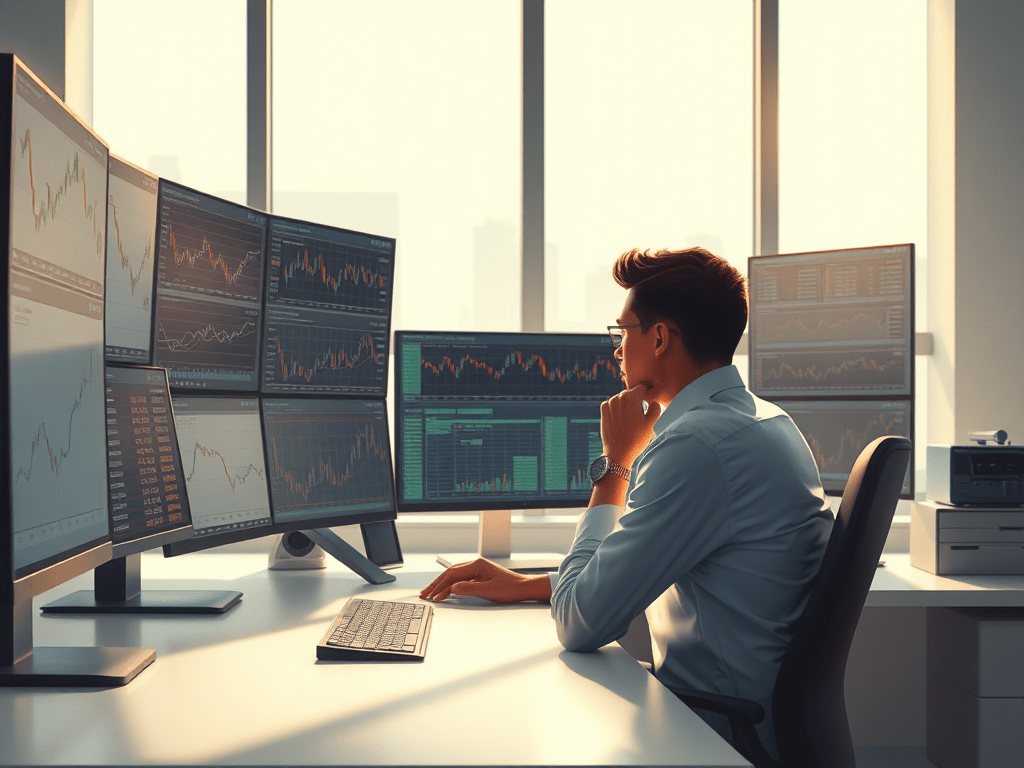
Sometimes the Best Trade Is No Trade
In trading, everyone talks about entries, strategies, risk–reward, psychology.
Very few talk about one of the most powerful tools a trader can use:
The Pause
A pause is not quitting.
A pause is not weakness.
A pause is professional behavior.
If you don’t learn when to stop, the market will force you to stop — by taking your money.
Why Traders Avoid Taking a Break (And Why That’s Dangerous)
Most traders don’t pause because:
- “What if I miss a good trade?”
- “I need to recover my loss quickly”
- “Others are trading, why shouldn’t I?”
- “My strategy works, today is just bad”
This thinking is emotion-driven, not market-driven.
The truth is:
When emotions are high, decision quality is low.
That’s when overtrading starts.
That’s when revenge trading starts.
That’s when discipline breaks.
When You MUST Take a Break From Trading
A pause becomes mandatory, not optional, in these situations:
1. After a Big Loss
A big loss doesn’t just damage your account.
It damages your confidence and objectivity.
Even if you think:
“I’m calm now”
Your subconscious is still trying to recover, not trade well.
Best action:
Stop trading. Review later. Protect capital and mindset.
2. When Nothing Is Working
You follow your rules.
You wait for your setup.
Still, trades keep failing.
This usually means:
- Market conditions changed
- Volatility shifted
- Your edge is not active right now
Best action:
Step back and observe, don’t force trades.
Markets move in phases. Traders must too.
3. After a Winning Streak
Yes, even after profits.
Why?
Because confidence can quietly turn into overconfidence.
That’s when:
- Risk increases “just a little”
- Rules bend “just once”
- Losses erase multiple wins
Best action:
Pause to lock in discipline, not just profits.
What a “Pause” Really Means (And What It Doesn’t)
A pause does NOT mean:
- Forget trading
- Stop learning
- Lose consistency
A pause DOES mean:
- No real-money trades
- No emotional decisions
- No forcing setups
You can still:
- Journal old trades
- Replay charts
- Study market behavior
- Improve your process
Think of it as active rest, not inactivity.
What Happens When You Respect the Pause
Traders who pause correctly experience:
- Clear thinking returns
- Emotional pressure reduces
- Mistakes become visible
- Discipline feels natural again
- Confidence rebuilds slowly but strongly
Most importantly:
Capital survives
And in trading, survival is everything.
The Market Will Always Be There
This is the biggest truth every trader must accept:
You don’t need to trade every day to become profitable.
Opportunities are endless.
Your capital is not.
Missing one trade means nothing.
Blowing your account means everything.
Final Thought: Pause Is a Skill, Not a Weakness
Professional traders know when to push
and more importantly, when to stop.
If trading feels heavy, confusing, emotional, or forced —
that is the market telling you:
Pause. Reset. Come back stronger.
Sometimes the most profitable decision
is to do nothing.
 Trade Consciously